Why Aging Pipelines Are Becoming One of the Biggest Integrity Risks in the Oil and Gas Industry

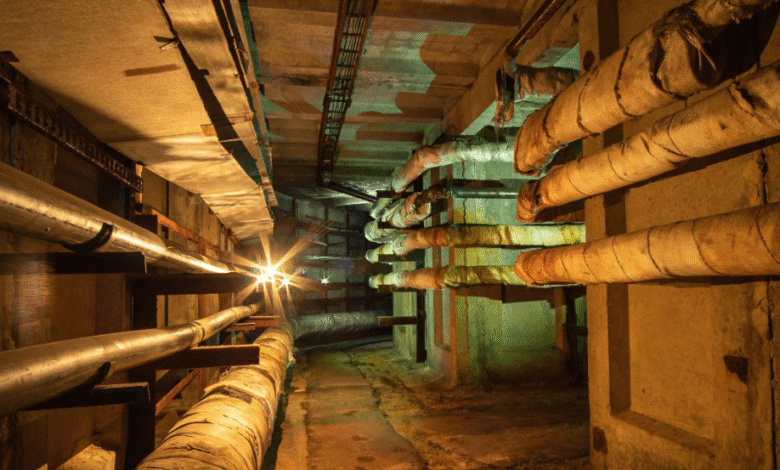
There is a conversation happening quietly inside boardrooms, turnaround planning meetings, and integrity review sessions across the oil and gas sector. It is not about new exploration or production targets. It is about the pipelines already in the ground, some for 30, 40, even 50 years, and whether the industry truly understands the condition these assets are in today.
The honest answer, more often than not, is no. Not fully. And that gap between assumed condition and actual condition is where the next generation of integrity failures is being born.
The Silent Degradation Behind Pipeline Integrity Failures
Pipelines do not fail overnight. They degrade over years and decades through mechanisms that are invisible to the naked eye and often underrepresented in routine inspection programs. External corrosion under insulation, internal erosion-corrosion in multiphase flow lines, stress corrosion cracking in high-pH environments, and hydrogen-induced damage in sour service applications are all slow-acting mechanisms that accumulate damage incrementally.
The challenge with pipeline integrity is that by the time conventional inspection methods detect a problem, the damage has often progressed well beyond the early intervention window. Wall thinning that started as a minor anomaly during the first decade of service can evolve into a critical defect by decade three, particularly if operating conditions have shifted from the original design basis. Temperature excursions, pressure cycling, fluid composition changes, and even soil settlement patterns all accelerate degradation in ways that static design codes never anticipated.
This is not a hypothetical scenario. It is the lived reality of pipeline operations across every major oil and gas basin in the world.
See also: How the First Home Buyer Grant Helps You Purchase
Why Aging Infrastructure Demands More Than Routine Inspection
The conventional approach to managing aging infrastructure has relied on a cycle of inspection, reporting, and scheduling repairs based on code-minimum requirements. For newer assets, this approach works adequately. But for pipelines that have been in service for multiple decades, code-minimum thinking creates a dangerous blind spot.
Here is why. Original design codes like ASME B31.3 or B31.4 define requirements for new construction. They establish wall thickness, material grades, and allowable stresses based on pristine conditions. They were never intended to answer the question that aging pipelines force operators to confront: is this pipeline, in its current degraded state, with its accumulated damage history, still fit to operate safely at current or modified conditions?
That question requires Fitness for Service (FFS) Assessment as per API 579 / ASME FFS-1. At Ideametrics Global Engineering, FFS engineering is applied not as a secondary review after an inspection flags a defect, but as a proactive integrity strategy that evaluates the full spectrum of active damage mechanisms, quantifies remaining life, and defines the precise operating envelope within which continued service is technically justified.
The difference between an FFS-driven integrity program and a code-minimum program is the difference between managing risk and merely documenting it.
Operational Safety Starts with Engineering Honesty
There is a tendency in the industry to extend pipeline service life based on favorable inspection results without interrogating what those results actually mean. A clean inline inspection run does not guarantee the absence of cracking mechanisms that ILI tools are not sized to detect. A passing hydrostatic test does not reveal creep damage or metallurgical degradation that only manifests under sustained operating loads.
Operational safety for aging pipelines requires engineering honesty. It requires acknowledging the limitations of every inspection technique, understanding the interaction between multiple damage mechanisms operating simultaneously, and applying assessment methodologies that account for what the data shows and what it cannot show.
At Ideametrics, this philosophy drives every pipeline assessment. Through Oil and Gas Engineering Services built around real-world degradation behavior rather than idealized assumptions, operators receive integrity guidance that reflects the actual condition of their assets, not a sanitized version of it.
Disaster Prevention Through Predictive Engineering, Not Reactive Maintenance
Every major pipeline failure investigation in the past two decades points to the same root cause pattern: known or knowable degradation that was either underestimated, mischaracterized, or left unaddressed until it reached a tipping point. The industry does not lack inspection data. It lacks the engineering rigor to translate that data into predictive action.
Disaster prevention in pipeline operations is not about installing more sensors or running more inspections. It is about applying the right analytical framework to the data that already exists. API 579 Level 1, 2, and 3 assessments provide exactly that framework, each level offering progressively deeper analysis for progressively more complex damage conditions.
Level 1 screening identifies whether a detected flaw falls within conservative acceptance limits. Level 2 assessment applies detailed calculations specific to the damage type, geometry, and loading. Level 3 assessment deploys advanced techniques including finite element analysis, fracture mechanics, and probabilistic methods to evaluate conditions that exceed standard assessment boundaries. At Ideametrics, all three levels are executed in-house, ensuring that no pipeline integrity question goes unanswered due to analytical capability gaps.
Building Operational Resilience into Pipeline Asset Strategy
Operational resilience for pipeline networks cannot be bolted on after a failure event. It must be engineered into the asset management strategy from the point where an operator first recognizes that their infrastructure is aging beyond its original design life.
This means integrating FFS findings into long-range capital planning. It means building Operational Resilience and Disaster Recovery Engineering frameworks that account for both gradual degradation scenarios and sudden-failure contingencies. It means establishing re-assessment intervals based on calculated damage progression rates rather than arbitrary calendar cycles. And it means partnering with engineering firms that have evaluated enough aging pipelines to recognize patterns that pure data analysis misses.
What the Industry Must Confront Now
The volume of pipeline infrastructure approaching or exceeding original design life is growing every year. Regulatory scrutiny on pipeline integrity management is tightening across every jurisdiction. And the consequences of getting it wrong, environmental, financial, reputational, and human, are escalating.
Operators who invest in rigorous FFS-based integrity programs today are not just managing risk. They are preserving the operational and commercial viability of assets that the energy sector will depend on for decades to come.
Ideametrics Global Engineering brings the depth of assessment capability, the breadth of damage mechanism expertise, and the engineering judgment that only comes from sustained, hands-on engagement with aging assets in the field. That is the foundation on which real pipeline integrity is built.